Why can early readings differ?
A CGM measures glucose in interstitial fluid, the fluid surrounding your cells. A fingerstick meter measures glucose in a small blood sample. These measurements come from different parts of the body, and their values may differ when glucose is changing quickly—for example, after a meal, exercise or insulin administration. The timing of each measurement therefore matters when comparing results.
Sensor insertion also triggers a local tissue response around the sensing filament. Published research describes how insertion-related tissue injury, changes in local blood flow and immune-cell activity can affect the environment immediately surrounding a glucose sensor.
Some cells involved in this response consume glucose close to the sensing surface. Changes in the surrounding tissue may also slow the movement of glucose toward the sensor. Under certain conditions, these effects can reduce the sensor signal and contribute to a reading that is lower than expected.
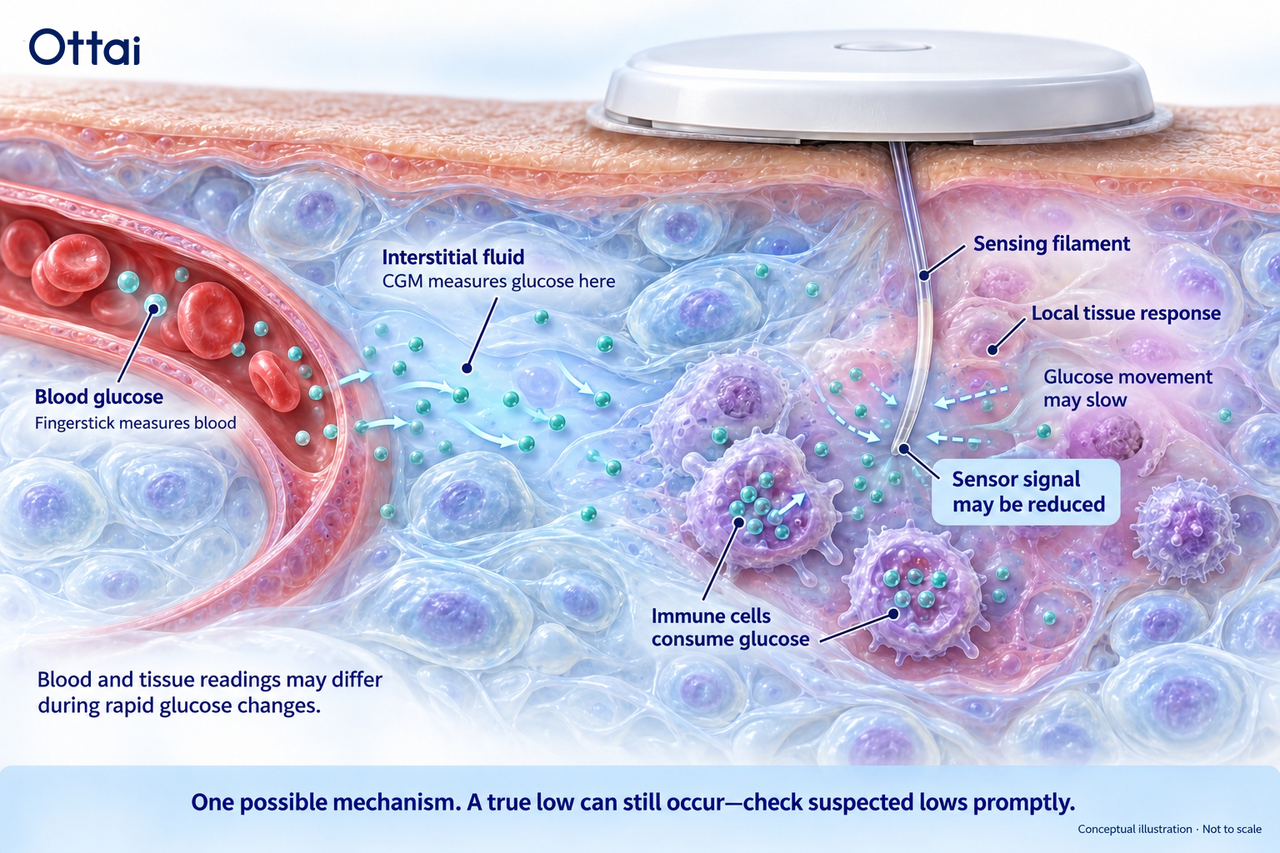
This provides one possible explanation for an early low. It does not establish that every new Ottai sensor will read low, that every low is caused by the tissue response, or that readings will become reliable after a fixed number of hours. A genuinely low glucose level can occur during the first day of sensor wear and still requires attention.
Follow the warm-up period and startup instructions supplied with your specific Ottai product. The warm-up period is part of starting the device; it should not be treated as a reason to delay checking or addressing a suspected low.
When checking an unexpected reading, note recent meals, exercise, glucose-lowering medication and any pressure on the sensor. Record both the CGM and meter reading times, as glucose may change between measurements. Comparing values taken several minutes apart can make a difference harder to interpret, particularly during a rapid rise or fall.
Check an unexpected low safely
If a CGM reading seems wrong or does not match how you feel, check your glucose with a fingerstick meter. Wash and dry your hands, use a new test strip and follow the meter’s instructions.
If you suspect hypoglycemia, follow your treatment plan promptly. Do not wait for the sensor to settle. Feeling well does not rule out a low. Seek urgent medical help if symptoms are severe or you cannot manage the episode safely.
Record both readings, their units, times and any symptoms. Contact Ottai support if discrepancies persist. If fingerstick checks confirm repeated lows, consult your healthcare professional.
Only calibrate if your sensor’s instructions allow it. A fingerstick check does not automatically mean you should calibrate.
Joseph et al. (2018). Glucose Sensing in the Subcutaneous Tissue: Attempting to Correlate the Immune Response with Continuous Glucose Monitoring Accuracy. Diabetes Technology & Therapeutics, 20(5), 321–324.
U.S. Food and Drug Administration. Blood Glucose Monitoring Devices.
American Diabetes Association. Signs, Symptoms, and Treatment for Hypoglycemia.
National Institute of Diabetes and Digestive and Kidney Diseases (NIDDK). Continuous Glucose Monitoring.